How Subtitles and Dubbing Change a Screen Performance
Subtitles and dubbing change how screen dialogue reaches you. Learn what each preserves, how translations differ, and which version suits your viewing needs.
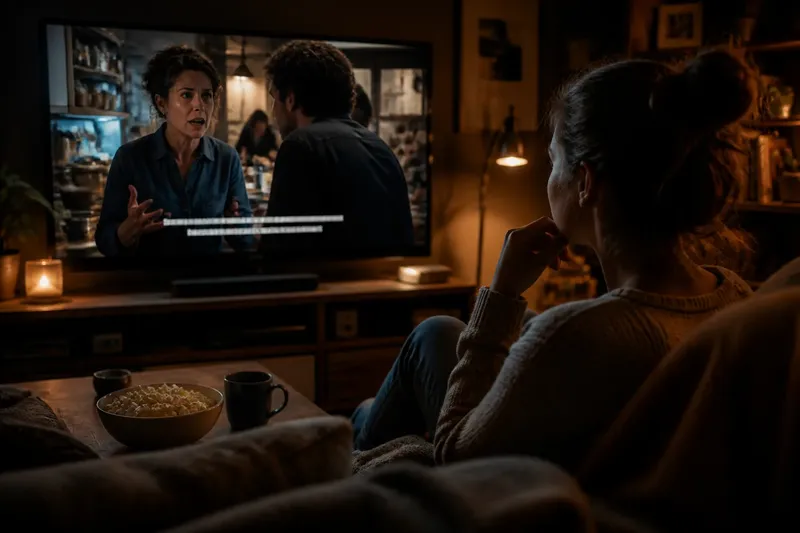
The most common mistake in choosing subtitles or dubbing is assuming one is faithful and the other is a compromise. Subtitles and dubbing change how a screen performance reaches you: one keeps the original voices audible beneath translated text, while the other gives translated dialogue a new voice. That difference can shift your attention from vocal detail to the image, or from reading to listening.
Subtitles and dubbing change voice and wording differently
Subtitles place translated dialogue on screen while leaving the original soundtrack audible. You can hear an actor’s pace, emphasis, accent, and emotional shifts, then read a written rendering that may be shorter than the spoken line.
Dubbing records translated dialogue in the language chosen for the new audience and places it over, or in place of, the original speech. It can make dialogue easier to follow without dividing attention between speech and text, but the original actor’s voice becomes less prominent or disappears.
Neither method transfers every feature intact. Subtitles preserve more of the original vocal texture but may condense the wording; dubbing supplies a continuous spoken translation but replaces some of the source performance with a new interpretation.
Subtitles keep the original performance audible
With subtitles, a quiet hesitation, a sudden change in tone, or a laugh that interrupts a line can still shape the scene. This matters when character comes through as much in delivery as in the words themselves.
The translation is also visible as wording. Viewers can notice how a phrase has been rendered, compare it with an expression they know, or pause to reread a line. That pairing may support language learning, though it is not a substitute for structured instruction.
Reading takes attention. A viewer may look down during a line and miss a facial expression, a gesture, or another detail in the frame. Rapid exchanges, dense dialogue, small text, and quick cuts can make subtitles harder to follow, especially when the screen is distant.
Subtitles also make an editorial choice visible: they must select what to include. A repeated phrase, form of address, or verbal stumble may be omitted to keep the text readable. The main meaning can remain clear while some rhythm or social nuance is lost.
Dubbing gives translated dialogue a new voice
Dubbing lets viewers listen to translated speech while watching the image. This can help when a scene depends on visual details, several people speak quickly, or reading on screen is uncomfortable.
A voice actor does more than speak a translated script. They perform the character in another language, using timing, emphasis, and emotion to fit the scene. The result can feel coherent in its own right, even when viewers know it is not the original voice.
That performance changes what the audience hears. The original actor’s pitch, vocal texture, accent, and small shifts in delivery may give way to different choices. Dubbing can preserve the emotional direction of a line without preserving the sound that carried it in the source performance.
Spoken translations also have to fit the scene’s timing. A line may need to last about as long as the original or appear to fit visible mouth movements, so its phrasing can differ from a subtitle. The result may sound natural aloud while moving further from the original wording.
What changes when a scene is subtitled or dubbed?
Which option keeps the original actors’ voices?
Subtitles leave the original soundtrack available, so you can hear the actors while reading the translation. Dubbing centers a new-language performance and may replace or lower the original speech; choose subtitles if hearing the source performance matters to you.
Which option is easier to follow during fast dialogue?
Dubbing may be easier when several characters speak quickly or the action depends on watching the frame. Subtitles can be demanding when lines change rapidly or appear in dense blocks, so a short scene can show which format feels clearer to you.
Can subtitles and dubbing use different wording?
Yes. Subtitles are shaped by reading time and screen space, while dubbed dialogue must work as speech and fit the scene’s timing. Both versions can express the same intention with different phrasing, so neither should automatically be treated as a word-for-word record of the other.
Which version helps with language learning?
Subtitles can pair the original language’s sounds with written translation, especially if you can pause and revisit a line. Dubbing offers sustained listening in the dubbed language but does not expose the original dialogue in the same way; choose according to the language and kind of practice you want.
Viewing conditions can change which version feels clearer
On a small phone screen, subtitles may cover a visual detail or be difficult to read. On a larger screen, they may be easier to track, while dubbing can help when you want to keep your eyes on the image.
Sound conditions matter as well. In a room where audio must stay low, subtitles can carry dialogue without requiring you to hear every line clearly. Accessibility needs can also guide the choice: a viewer who has difficulty reading on screen may prefer dubbing, while someone who cannot hear the soundtrack may need subtitles or captions.
Captions can include sound cues and identify speakers, features ordinary subtitles may not provide. The format and options vary by title and service, so check the available settings when those details matter.
Use a short scene to identify what each version emphasizes
Rather than judging a whole film from its opening, compare a brief passage in both formats. Notice whether a joke, pause, or interruption remains clear, whether the wording is easy to follow, and whether your attention stays on the parts of the image you care about.
Imagine you are choosing a version of a family drama with a long argument in a crowded kitchen. You begin with subtitles because you want to hear how the original actors interrupt one another, but you notice that reading makes it harder to follow faces and movement. You switch to dubbing for the same passage and find it easier to watch the argument unfold, though the original vocal details are no longer as accessible; the choice depends on which tradeoff matters more for that scene.
A bilingual viewer might keep subtitles for a scene where source-language delivery matters, then switch to dubbing when reading becomes tiring. Someone watching with family may choose the version that lets everyone follow comfortably, even if individual viewers would prefer different formats alone.
Subtitles and dubbing carry different parts of a screen performance forward: one keeps the source voice close and makes translated wording visible, while the other gives translated speech a new voice and frees attention for the image. If you are unsure which format fits, start with the one that preserves the detail you most want to notice, then change it if the scene asks for a different kind of attention.